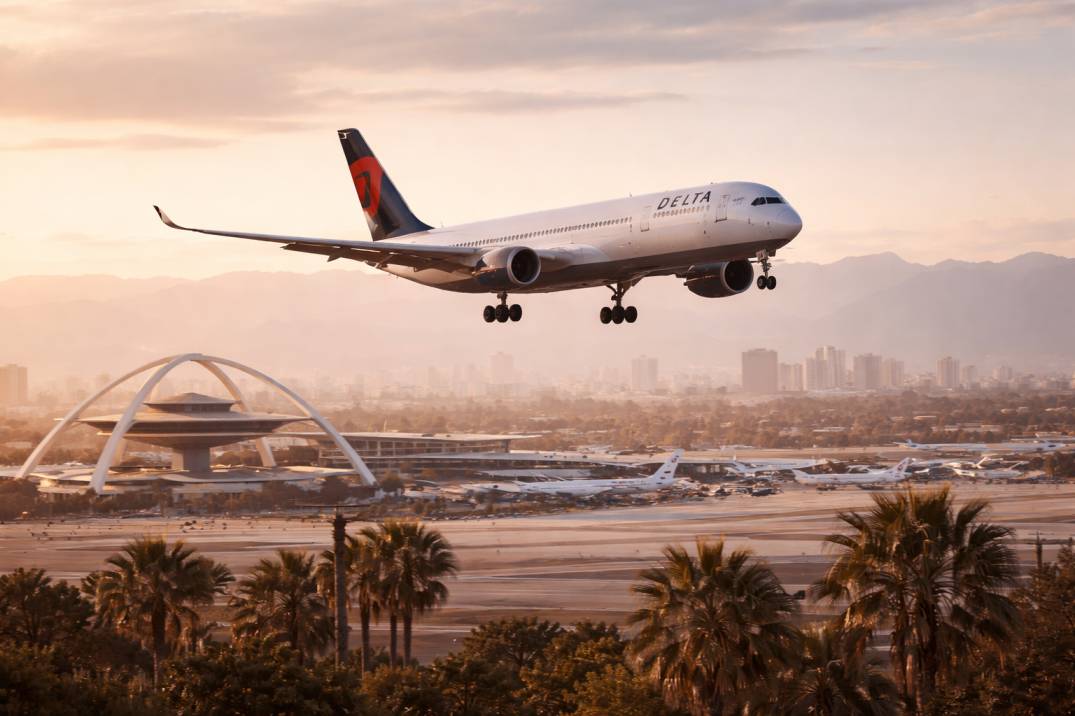
Passengers boarded Delta Flight DL275 diverted LAX thinking it would be a normal journey from Detroit to Tokyo. Many settled into their seats, watched movies, or tried to sleep. The aircraft was modern, the weather was stable, and nothing seemed unusual. Midway over the Pacific, however, something changed inside the cockpit. The flight path slowly curved back toward the United States instead of continuing west. That moment marked the beginning of an unexpected but carefully managed diversion.
From Detroit to the middle of the Pacific
The plane lifted off smoothly from Detroit in the early afternoon. It climbed steadily above the clouds, crossing vast stretches of ocean. Long-haul flights like this usually follow a fixed path for hours without change. Passengers saw only blue water below and calm skies around them. No one onboard expected that Los Angeles would become their destination that day.
Why did the plane turn back?
The aircraft’s systems detected a warning related to the engine anti-ice equipment. This system stops ice from forming on engine parts at high altitude. If ice builds up, it can affect how the engine works. Pilots treat such alerts very seriously, even if the plane still feels stable. Instead of continuing over remote waters, they chose a safer option closer to land. That decision led to Delta Flight DL275 diverted LAX instead of reaching Japan.
Why Los Angeles made sense
Los Angeles International Airport is one of the largest and best-equipped airports in the U.S. It has advanced maintenance facilities capable of handling wide-body aircraft such as the Airbus A350. It also has medical teams, technical crews, and airline staff ready at short notice. For these reasons, LAX was the most practical and safest landing choice at that moment.
Inside the cockpit – how the decision unfolded
1) Reading the warning carefully
Pilots did not panic when the alert appeared on their screens. They cross-checked the data and reviewed standard safety procedures. They communicated clearly with air traffic control about the situation. Every step followed a structured checklist built from years of aviation experience.
2) Weighing distance and risk
The crew compared how far Tokyo was versus how far Los Angeles was. Flying deeper over the Pacific would mean fewer landing options. Turning back offered more flexibility and stronger ground support. Safety clearly outweighed sticking to the original schedule.
3) Informing the cabin calmly
The captain spoke to the passengers in a steady, reassuring tone. He explained that the plane would land in Los Angeles as a precaution. Cabin crew remained composed, which helped keep the atmosphere calm. Clear communication reduced fear and confusion onboard.
4) Preparing for a smooth landing
As the plane approached California, pilots coordinated with LAX air traffic control. Ground teams prepared emergency and technical support just in case. The aircraft touched down gently, and passengers disembarked safely without any injuries.
What passengers experienced on the ground
After landing, travelers were guided to the terminal in an orderly way. Delta staff arranged hotel rooms for those who needed them. Meal vouchers were handed out while rebooking was underway. Some passengers continued to Japan the next day, while others adjusted their travel plans. Though inconvenient, the process was organized and respectful.
How common are flight diversions
Flight diversions are rare compared to the total number of flights worldwide. Most aircraft complete their journeys without any major changes. When diversions do occur, they are usually precautionary rather than dangerous. Airlines prefer small delays over any risk to passenger safety.
What this says about airline safety
Modern airplanes are filled with sensors that monitor every key system in real time. These tools allow pilots to act before a minor issue turns serious. The fact that Delta Flight DL275 diverted LAX shows that safety layers worked as intended. Prevention always comes before speed in aviation.
A simple way to understand it
Think of it like driving on a highway and seeing a dashboard warning light. You could keep going, but stopping at the nearest safe place is the smarter choice. That is exactly what happened in this case, just at 38,000 feet in the air.
Key takeaways from this incident
• Diversions are safety decisions, not emergencies.
• LAX was chosen because of strong technical support.
• Passengers were cared for after landing.
• Aircraft warning systems proved their value.
A final reflection
The story of Delta Flight DL275 diverted LAX is not about danger, but about careful judgment. It reminds travelers that aviation is built on preparation, training, and trust in technology. Delays may frustrate, but they exist to protect lives. In the end, every safe landing matters far more than every missed schedule.