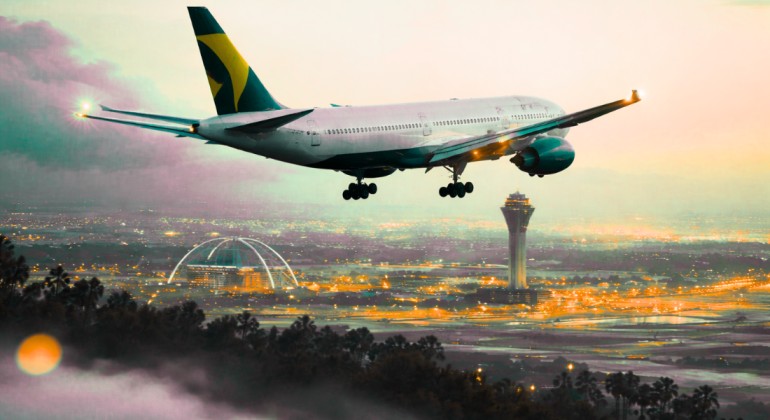
Delta Flight DL275 diverted to LAX on its way from Detroit to Tokyo after the flight crew identified a technical irregularity while the aircraft was already hours into its journey over the Pacific. The unscheduled landing at Los Angeles International Airport drew immediate attention online, as flight-tracking data showed the wide-body jet abruptly altering course and heading back toward the U.S. West Coast.
Delta later confirmed the diversion was precautionary, emphasizing that the aircraft landed safely and that passenger safety was never compromised. Still, the incident highlights how airlines respond in real time when onboard systems fail, particularly on long-haul routes, where options are limited once an aircraft is far from land.
Here is what we know so far: what caused the diversion, and why LAX was the logical choice.
Delta Flight DL275 was diverted to Los Angeles after pilots identified a potential issue with the aircraft’s engine anti-ice system. As a safety precaution, the crew chose to land at a major airport with full maintenance support rather than continue across the Pacific Ocean.
What Is Delta Flight DL275?
Delta Flight DL275 is a scheduled long-haul international flight operated by Delta Air Lines.
In simple terms:
- It regularly flies from Detroit (USA) to Tokyo (Japan)
- It is designed for ultra-long distances, often crossing the Pacific Ocean
- It uses a wide-body aircraft built for comfort and long flight hours
What Happened to Delta Flight DL275
Delta Flight DL275, operated by Delta Air Lines, departed from Detroit bound for Tokyo Haneda Airport. Several hours into the flight, the cockpit crew detected an alert related to an engine system.
Flight data later showed the aircraft turning back toward the continental United States, ultimately landing at Los Angeles International Airport. The landing was uneventful, and no injuries were reported.
Delta has not indicated that passengers were ever in danger, stressing that the diversion followed established safety procedures.
Why Flights Divert Mid-Air
Despite public perception, diversions are not rare failures. They are planned outcomes built into aviation safety systems.
Flights divert when:
- A system behaves outside expected limits
- Medical attention may be needed sooner
- Weather conditions change
- Continuing the route reduces safety margins
In simple terms, pilots do not wait for a small issue to become a big one. They act early.
Why DL275 Diverted to LAX
According to the available information, the alert pertained to the engine anti-ice system.
What does that system do?
- Prevents ice buildup on engine components
- Protects performance at high altitude
- Is critical during long over-water flights
If that system shows some irregularity, continuing thousands of miles over open ocean is not advisable.
Why Los Angeles?
LAX offers:
- Full maintenance and inspection facilities
- Delta operational support
- Runways designed for large international aircraft
For a flight already west of the Rockies, Los Angeles was the safest and most practical option.
What Passengers Experienced
Passengers aboard DL275 reported:
- Clear announcements from the flight crew
- A calm and controlled landing
- Assistance from Delta staff after arrival
While diversions can feel alarming, aviation experts note that calm communication is often the clearest sign that a situation is under control.
What Happens After a Diversion
Once the aircraft is on the ground:
- Maintenance teams inspect the system
- Engineers determine whether parts need replacement
- The plane is cleared only after meeting safety standards
- Passengers are rebooked on alternative flights
This process can take hours, but it ensures that the aircraft does not return to service prematurely.
Practical Takeaways for Travelers
- A diversion usually means safety systems worked
- Calm crew communication is a good sign
- Airlines prioritize inspection over schedule
- Carry essentials in case of unexpected stops
What This Incident Shows About Airline Safety
The Delta flight DL275 diversion at LAX underscores a key principle of modern aviation: prevention beats reaction. Pilots do not gamble with long distances or limited options. They choose certainty, even if it disrupts schedules.
For passengers, the inconvenience is real. For the industry, the response reflects a system built to detect, decide, and divert before risk escalates.
FAQ
Why did Delta Flight DL275 divert to LAX?
Because pilots identified a technical system concern and chose to land at a major airport with full maintenance support.
Was this an emergency landing?
No. The diversion was precautionary, not an emergency.
Will the aircraft fly again?
Yes, once inspections and repairs are completed.
What is an engine anti-ice system?
A system that prevents ice from forming on engine components during high-altitude flight.
Conclusion
Delta Flight DL275’s diversion to Los Angeles was not a failure, but a textbook safety call. Faced with a technical alert, the crew opted for the safest available airport rather than continue across the Pacific.
The aircraft landed safely. Passengers were supported. And the system worked exactly as designed quietly, deliberately, and without drama.