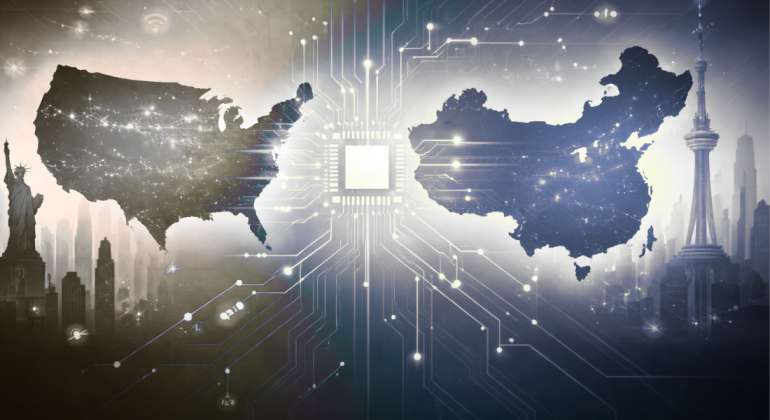
The US China technology competition is no longer just about gadgets or apps. It is about power, control, and the future of the global economy. When Jamie Dimon, one of the most influential bankers in the world, spoke about this rivalry, people listened. His message was simple but serious: technology will decide who leads the world next. Many beginners feel confused by this topic. Why are the US and China fighting over chips, AI, and data? How does this affect normal people, jobs, and businesses?
This article explains US China technology competition through Jamie Dimon’s lens, in plain English. You will learn what the competition is, why it matters, and what could happen next.
Jamie Dimon On The Race
According to Jamie Dimon, the US China technology competition is a strategic race for global leadership. The tech race focuses on areas such as semiconductors, artificial intelligence, and data control. Dimon warns that the country leading in technology will shape economic power, national security, and global influence for decades.
What Is the US China Technology Competition?
The US China technology competition is a long-term struggle to dominate critical technologies. Think of it like this: In the past, power came from oil and weapons. Today, power comes from chips, data, and smart machines.
In simple terms
- The United States wants to protect its tech leadership.
- China wants to become fully independent and lead globally.
- Both fear becoming dependent on the other.
This is not a trade fight. It is a cold war.
Why Jamie Dimon’s Opinion Matters
Jamie Dimon sits at a rare intersection of finance, policy, and global markets. When he speaks, governments listen not because he is always right, but because he sees risks early. He does not dismiss national security concerns. But he also challenges a growing assumption in Washington: that blocking China is enough.
What Dimon clearly warned
- Technology leadership = economic leadership
- Falling behind in tech = national risk
- The US must invest more, not just restrict China
Real-life example
Blocking China from buying US chips is like locking your neighbor out of your tools without improving your own skills. Dimon believes innovation beats isolation.
Key Areas in the US–China Rivalry
Semiconductors (Computer Chips)
Chips power everything:
- Smartphones
- Cars
- AI tools
- Military systems
The US leads in design.
China depends on imports and wants self-sufficiency.
Artificial Intelligence (AI)
AI decides:
- Business efficiency
- Cybersecurity
- Military intelligence
Both nations are racing to control AI standards.
Data and Cloud Computing
Data is the new oil.
- The US supports open global data flows.
- China controls and localizes data tightly.
This difference shapes how tech companies operate.
Why the Us Is Worried About China’s Tech Growth
The concern is not just economic.
Main US fears
- Tech used for military advantage.
- Cyber spying risks.
- Loss of global influence.
Jamie Dimon’s balanced view
- Competition is healthy.
- Panic is dangerous.
- Long-term innovation matters more than bans.
How This Competition Affects the Global Economy
This rivalry affects everyone, even the whole world.
Direct impacts
- Higher chip prices.
- Slower tech supply chains.
- More government rules.
For businesses and workers
- Companies diversify away from one country.
- New tech hubs grow in India and Southeast Asia.
- Jobs shift, not disappear.
FAQs
What did Jamie Dimon say about US China tech competition?
Jamie Dimon said technology leadership will define future global power. He warned that the US should focus more on innovation, education, and infrastructure rather than relying solely on restrictions against China.
Why are semiconductors central to US China rivalry?
Semiconductors run modern technology, from phones to missiles. The US controls advanced chip design, while China depends on imports. Whoever controls chips controls future tech growth.
Is the US China tech competition a Cold War?
Many experts call it a “technology cold war” because it involves long-term rivalry, restrictions, and influence battles without direct military conflict.
How does this competition affect common people?
It affects product prices, job markets, and access to technology. Delays in chip production can raise prices for cars, phones, and electronics worldwide.
Will China overtake the US in technology?
China is growing fast, but leadership depends on innovation, talent, and global trust. The race is still open.
What is the main goal of the US technology restrictions on China?
To protect national security and slow China’s access to advanced technologies.
Why does Jamie Dimon support innovation over restrictions?
Long-term leadership comes from building better technology, not from blocking others.
Does this rivalry affect developing countries?
Yes. It reshapes supply chains and creates new manufacturing hubs globally.
Conclusion
The US China technology competition, highlighted by Jamie Dimon, is about who shapes the future. This is not a short fight. It is a decades-long race driven by chips, AI, and innovation.
Dimon’s core message is clear:
“Invest, innovate, and stay open-fear alone is not a strategy.”
Understanding this competition helps you see where the world economy is heading next.