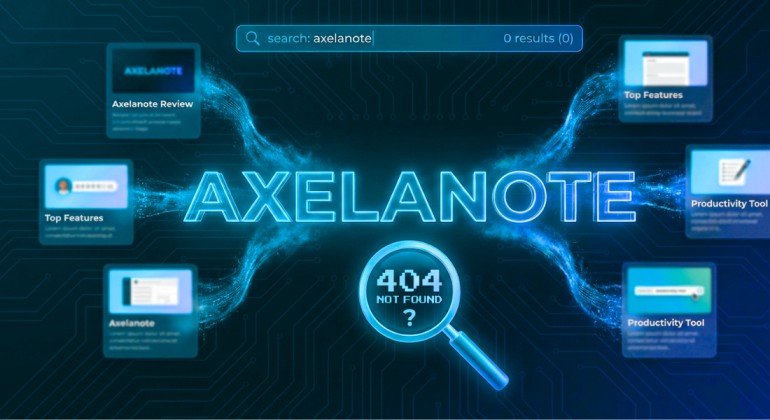
Search for axelanote, and you will notice something unusual. Many articles discuss it as a practical tool. They describe features, uses, and benefits with confidence. But when you try to find the actual product, nothing appears.
This happens because axelanote is a coined keyword. It sounds meaningful, modern, and technical, which makes people assume it must be real. Over time, blogs began building explanations around that assumption. This article explains the truth in a clear and simple way.
Why AxelaNote Sounds Like a Real Product
The word’s structure creates confusion. It feels familiar, like a name you have seen in the tech world. The brain tries to connect it with something known.
A Name That Suggests Purpose
The word can be split into two parts:
- “Axela” sounds fast and technical
- “Note” clearly relates to writing or ideas
Together, they suggest a digital note-taking tool. This is how many modern brand names are formed. They sound meaningful even when they are newly created.
How Search Intent Shapes Online Content
When users search for axelanote, they expect to find a tool or application. Writers often create content based on what readers expect. Instead of verifying the source, they explain the term as if it were real.
As more blogs repeat similar ideas, the term starts to feel authentic. Repetition builds trust, even without proof.
The SEO Advantage of Coined Keywords
From an SEO perspective, a unique word such as axelanote has no competition. This makes it easy for articles to rank quickly. Writers use such terms to test strategies or attract curiosity.
Because no one owns the keyword, any content written around it can appear on the first page of search results.
What This Teaches About Branding
This shows how online perception forms. A word that sounds like a brand can slowly gain identity through content alone. People begin to believe in the name simply because it is explained in many places.
What Blogs Say Versus the Actual Reality
Many blogs describe axelanote as:
- A smart note-taking app
- A digital writing assistant
- A productivity platform
These descriptions sound detailed and convincing. However, there is no official website, app listing, or company behind these claims. The explanations are built purely on how the word sounds.
This creates a gap between online content and real facts.
FAQ
What is axelanote?
Axelanote is a coined term with no real product, company, or official meaning.
Is axelanote a real app or software?
No. There is no verified tool, platform, or brand associated with this term.
Why do blogs describe axelanote like a product?
Because the name sounds like a tech brand, writers create explanations based on expected search intent rather than facts.
Why does axelanote rank in search results?
It is a low-competition keyword. Articles written around it rank easily due to their uniqueness.
Why This Topic Matters for SEO and Branding
The case of axelanote is useful for understanding how SEO, naming psychology, and content strategy work together.
- Unique names are easy to rank
- People trust words that sound like brands
- Repetition online can create false legitimacy
- Search intent often shapes content more than reality
This is a practical example of how perceptions can form online.
Conclusion
Axelanote is not a hidden tool or upcoming startup. It is an invented term that acquired meaning through repeated use in online content. The name sounds right, so people believe it must represent something real.
Understanding this helps you see how search behavior, branding style, and SEO strategies influence what we read online. Sometimes, a word spreads not because of what it is, but because of what it sounds like.